Truffle Trees for Black Truffle (Tuber melanosporum)
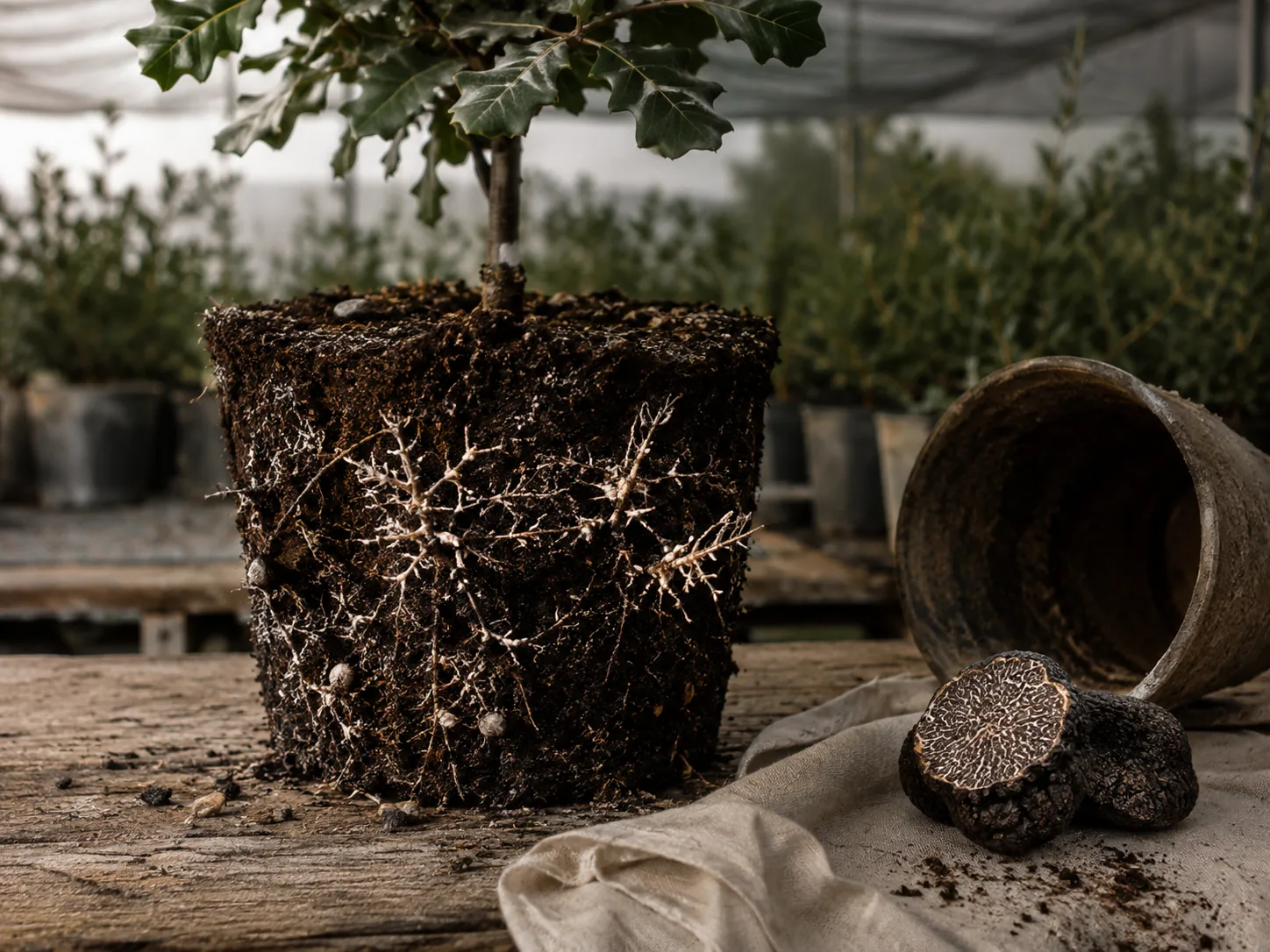
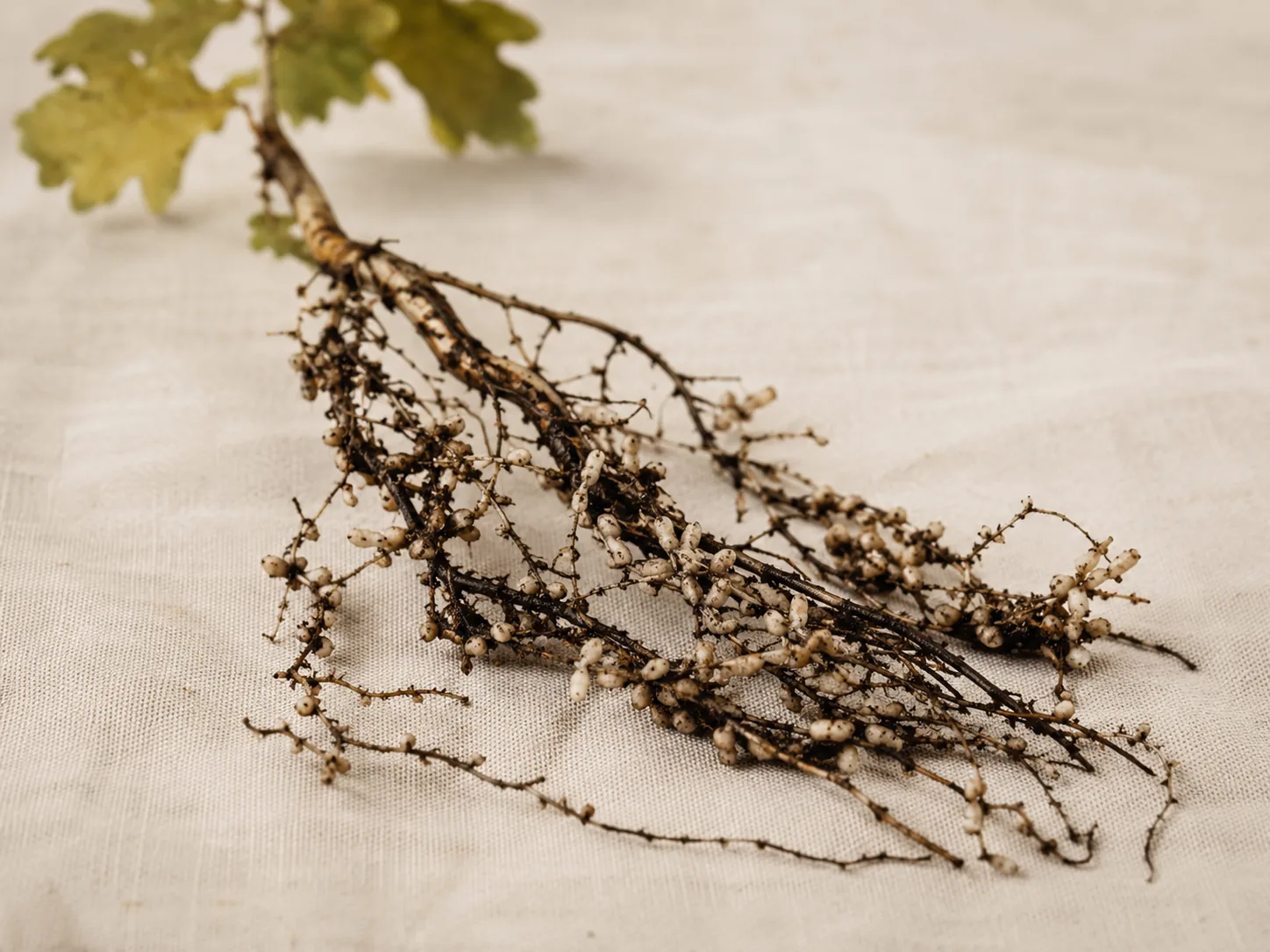
Truffle trees are young host trees whose roots already carry the black truffle fungus, Tuber melanosporum, when they leave the nursery.
Everything a plantation produces in ten years depends on that plant being what it says it is.
This section covers what the plant is, how many a hectare needs and what to check before ordering.
Choosing and ordering truffle trees
Inoculated Truffle Trees: How Black Truffle Mycorrhiza Works
The symbiosis, and how a nursery proves it.
Truffle Trees for Sale: Black Truffle Plants from Spain
How an order is placed and what to ask before paying.
Truffle Seedlings for a Black Truffle Plantation
How many per hectare and when they go in the ground.
What a truffle tree is
A truffle tree is a host tree, usually an oak, inoculated in the nursery so the black truffle fungus lives on its roots. The two feed each other, and if the tree lacks food it gives none to the fungus: a healthy tree is the precondition for any harvest.
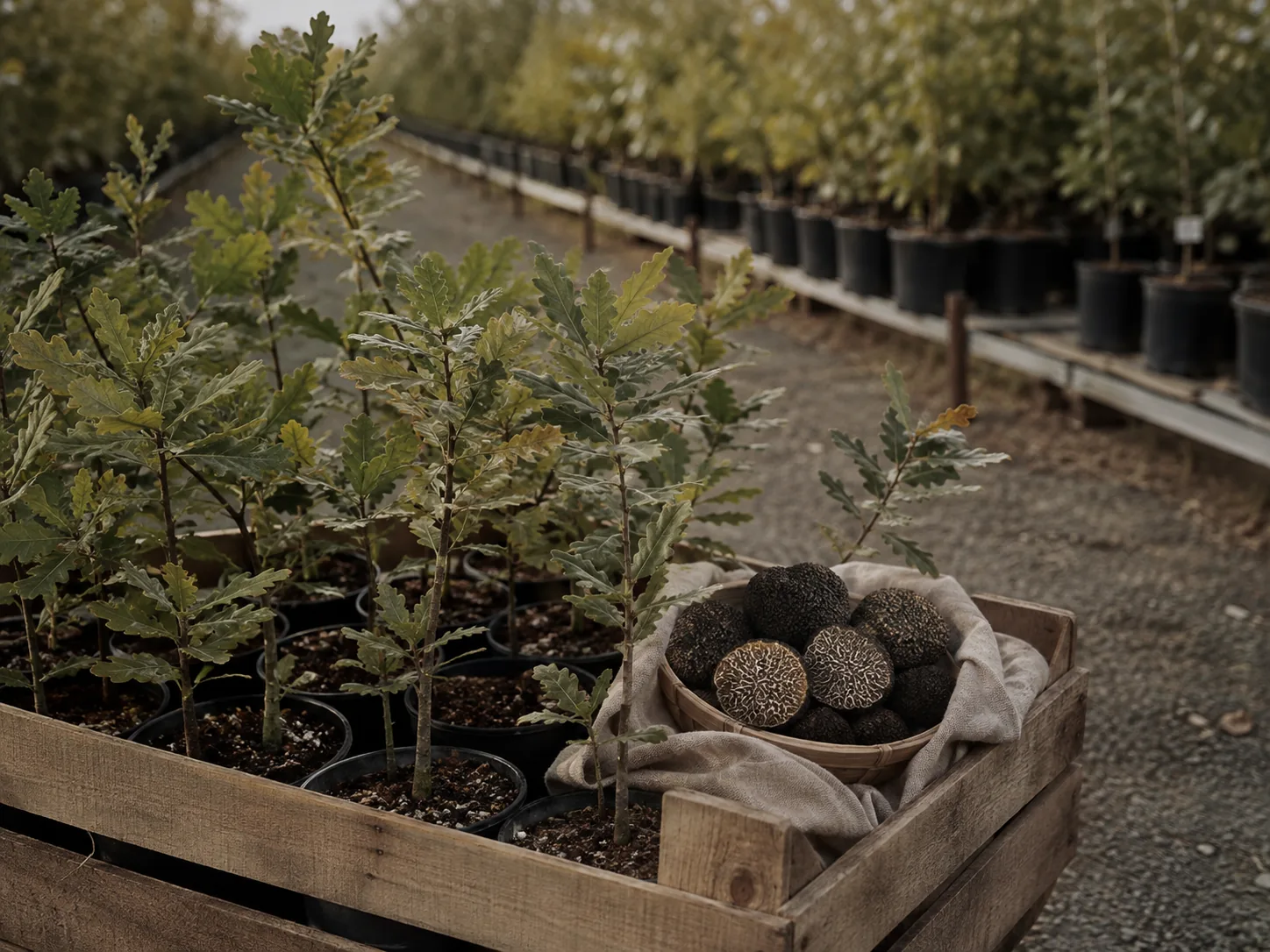
Black truffle associates with oaks, the genus Quercus, and the grower is blunt about which ones: holm oak, oak and Portuguese oak are the best options. The choice between them is made by the plot, not by preference.
Which host tree to plant, and which one to avoid
Holm oak (Quercus ilex) is the species most plantations are built on. It takes hard winters — fifteen, twenty, even twenty-five degrees below zero without significant damage — it prunes easily, and it resists colonisation by the fungi that displace black truffle better than the other oaks.
Portuguese oak (Quercus faginea) carries a powerful, far-reaching root system and stands cold and frost even better, which is why it turns up at higher altitude. It settles well into clay ground. It is a little more open to contamination than holm oak, and it branches hard and climbs: it needs topping from the start, and its pruning is more involved.
Kermes oak (Quercus coccifera) is the fallback for hot sites with little water. Growth is extremely slow, the tree ends up like a squat holm oak, pruning is awkward and dogs work it badly at harvest. It is a support species, not an offer.
Hazel (Corylus avellana) produces earlier, and that is the whole of its case. Production falls away early, and the tree is far more likely to be colonised by other underground fungi — Tuber brumale above all, the most dangerous contaminant there is, which can displace black truffle across the whole plot. If the point of the plantation is black truffle, hazel is not the plant to buy.
Where the plant comes from, and why the nursery decides the plantation
Truffle growing is a closed sector, and the grower uses that word: hermetic. Which nursery you buy from matters more than how many of them there are.
What he looks at is experience, professionalism and whether the nursery takes responsibility when a batch is wrong. Then the two things that can actually be measured on the plant: its forest quality and its mycorrhizal quality.
Neither is taken on trust. Spanish nursery stock has to meet the plant-quality rules of Royal Decree 289/2003, and the fungus on the roots is settled by an analysis the buyer commissions from an outside laboratory, batch by batch.
How many truffle trees a hectare needs
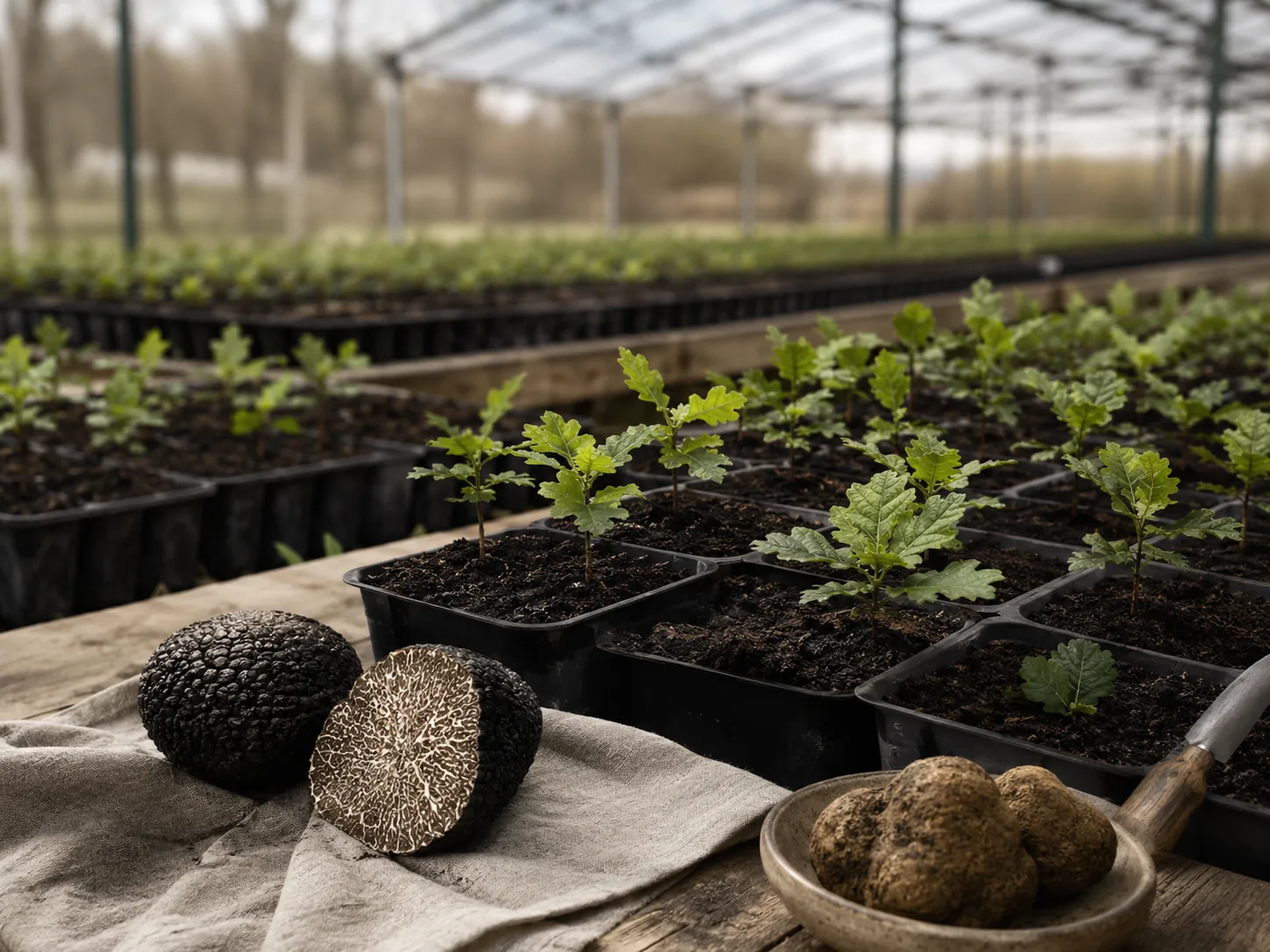
The density the grower uses is 300 plants per hectare, so forty hectares means about 12,000 plants.
That figure sets the order size and the lead time with the nursery, so it is the first number to fix. Order early: nursery stock is grown to order, not held on a shelf.
There is no ideal spacing, and the grower will not name one. It follows from the host species, the water you can put on the plot, the aspect and the sunlight it gets, the surface you have, the money you are prepared to invest, and — where a subsidy is involved — whatever the decree imposes.
Small plots are increasingly planted tight, something done a great deal in France, to use the ground fully and bring production forward. The trade-off is that more trees mean more shade and more water.
Some of the distances are not yours to choose. Minimum setbacks apply to neighbouring land, roads and tracks, other infrastructure, and watercourses, where the river authority fixes the distance. Leave room as well for maintenance, for harvesting and for machinery.
When truffle trees start to produce
The grower gives the timeline without decoration, and calls it a very long-term investment.
- Years 5–6: first truffles, token amounts.
- Years 8–10: commercial production.
- Years 10–12: the plantation starts to earn.
- Years 12–18: peak production.
- Up to year 30: productive life of the tree.
How long do truffle trees take to produce?
First truffles at five or six years, commercial production at eight to ten, and the plantation starts to earn at ten to twelve.
How many truffle trees do I need per hectare?
The grower plants 300 per hectare. For forty hectares that is about 12,000 plants. He gives a density rather than a spacing pattern, because the right spacing depends on the host tree, the water, the aspect, the surface, the budget and any subsidy conditions.
Which host tree is best for black truffle?
Oaks. The grower names holm oak, oak and Portuguese oak as the best options, with kermes oak as a fallback on hot dry ground. Hazel produces earlier but declines early and carries Tuber brumale, the most dangerous contaminant, which can displace black truffle across the plot.
Can you ship truffle trees to the United States?
Live plants are subject to plant-health rules that vary by country. The destination is confirmed when the order is placed; we do not promise a route we have not checked.
Ask for a quotation for truffle trees
Send the surface, the country and the planting season; the number of plants follows from the surface. Live plants are subject to plant-health rules that differ by country, so delivery to your destination is confirmed, with the price, before anything is committed.
Ask for a quotation