Tuber melanosporum: the Black Truffle
Tuber melanosporum is the scientific name of the black winter truffle, the fungus sold in France as Périgord truffle and in Spain as trufa negra.
It grows underground, attached to the roots of a host tree, and it is harvested from December to April with a trained dog.
Spain is the largest producer in the world, at around 120 tonnes a year against roughly 40 in France, and the province of Teruel accounts for about 80 per cent of world production. Around 90 per cent of that Spanish harvest is exported fresh to France, where it is processed and re-sold, which is why so much of the species reaches a kitchen under a French label.
How to recognise Tuber melanosporum
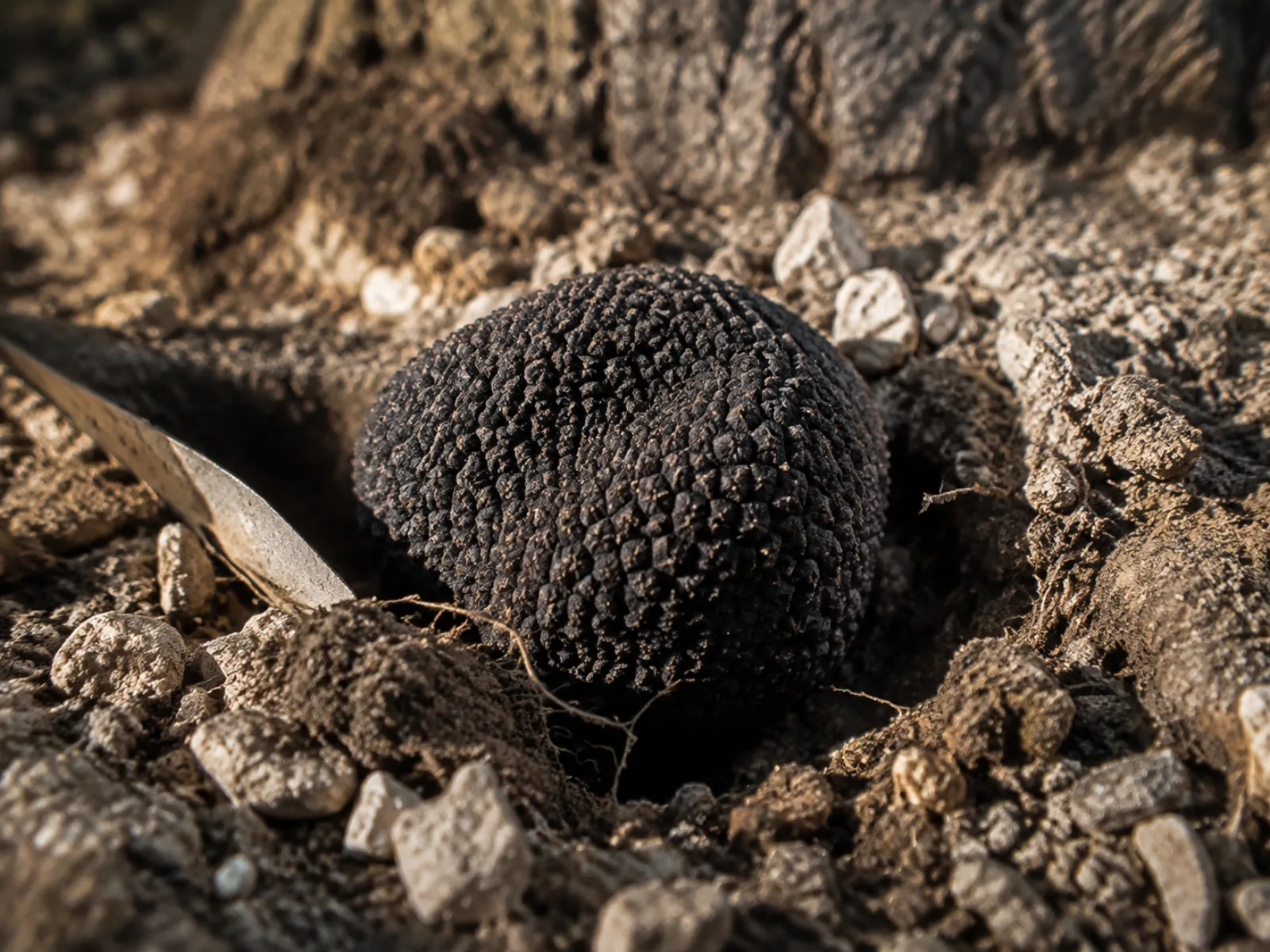
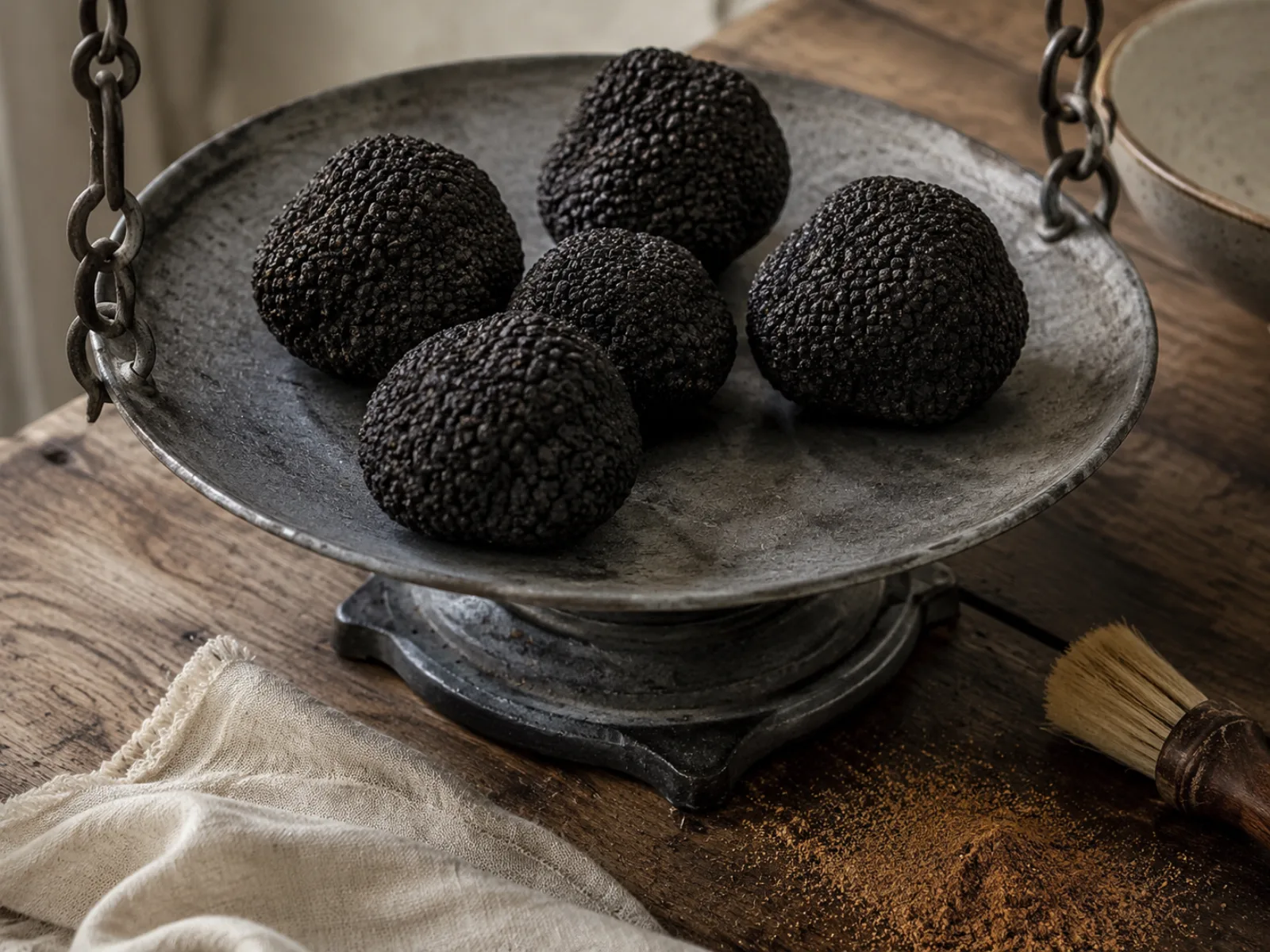
A ripe piece has a black skin covered in small, tight, pyramid-shaped warts. Cut open, the flesh is dark purple-brown, marbled with fine white veins that do not darken in the air.
The aroma is the test: penetrating and earthy, filling a closed jar within minutes. A piece with no smell is unripe, past its prime, or not the species it claims to be.
| Species | Tuber melanosporum |
|---|---|
| Common names | Black truffle, winter truffle, Périgord truffle, trufa negra |
| Skin | Black, with small pyramid-shaped warts |
| Flesh when cut | Dark purple-brown with fine, branching white veins |
| Season | December to April |
| Where ours grows | Teruel, Spain |
How Tuber melanosporum grows on a tree root
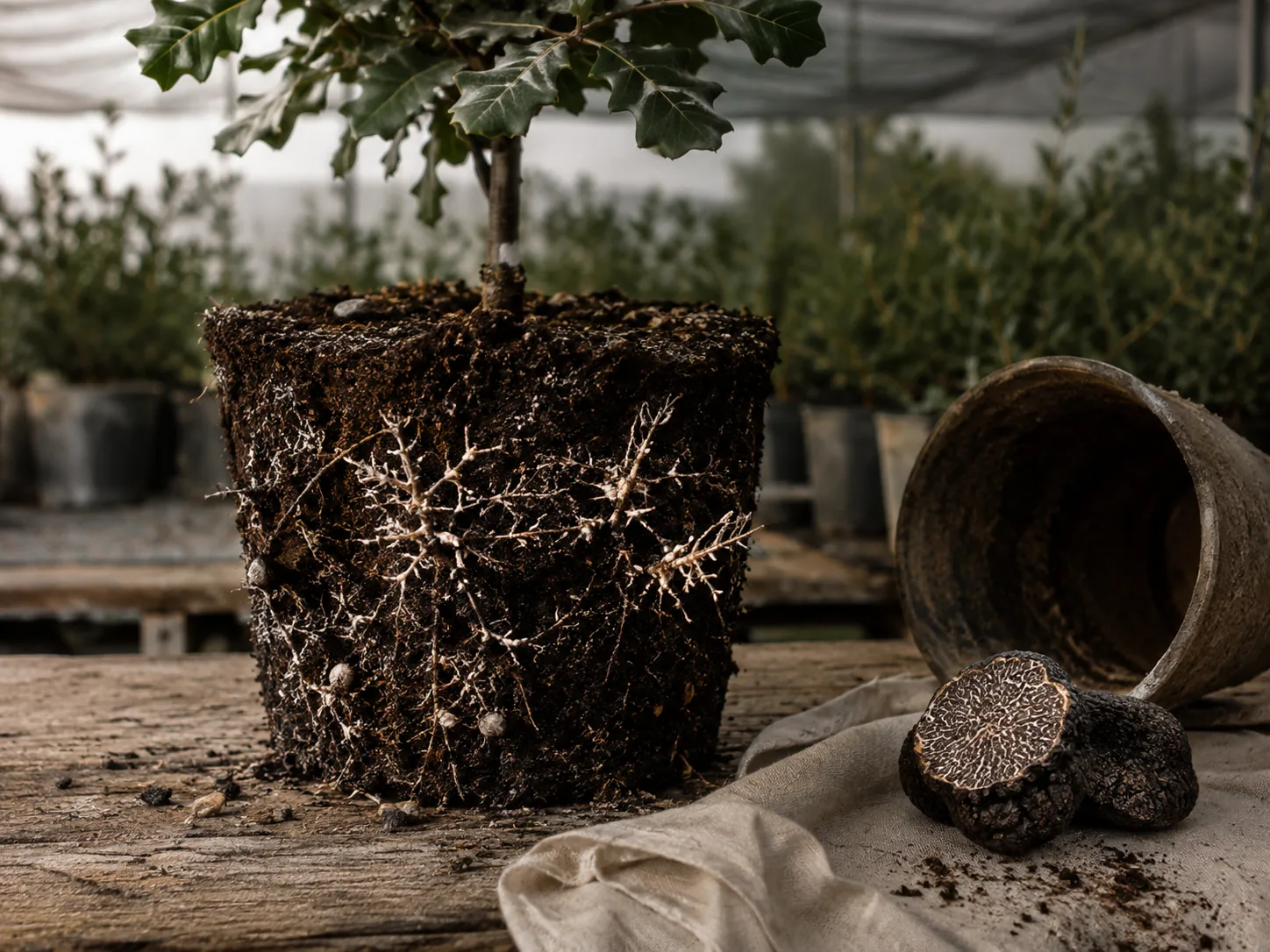
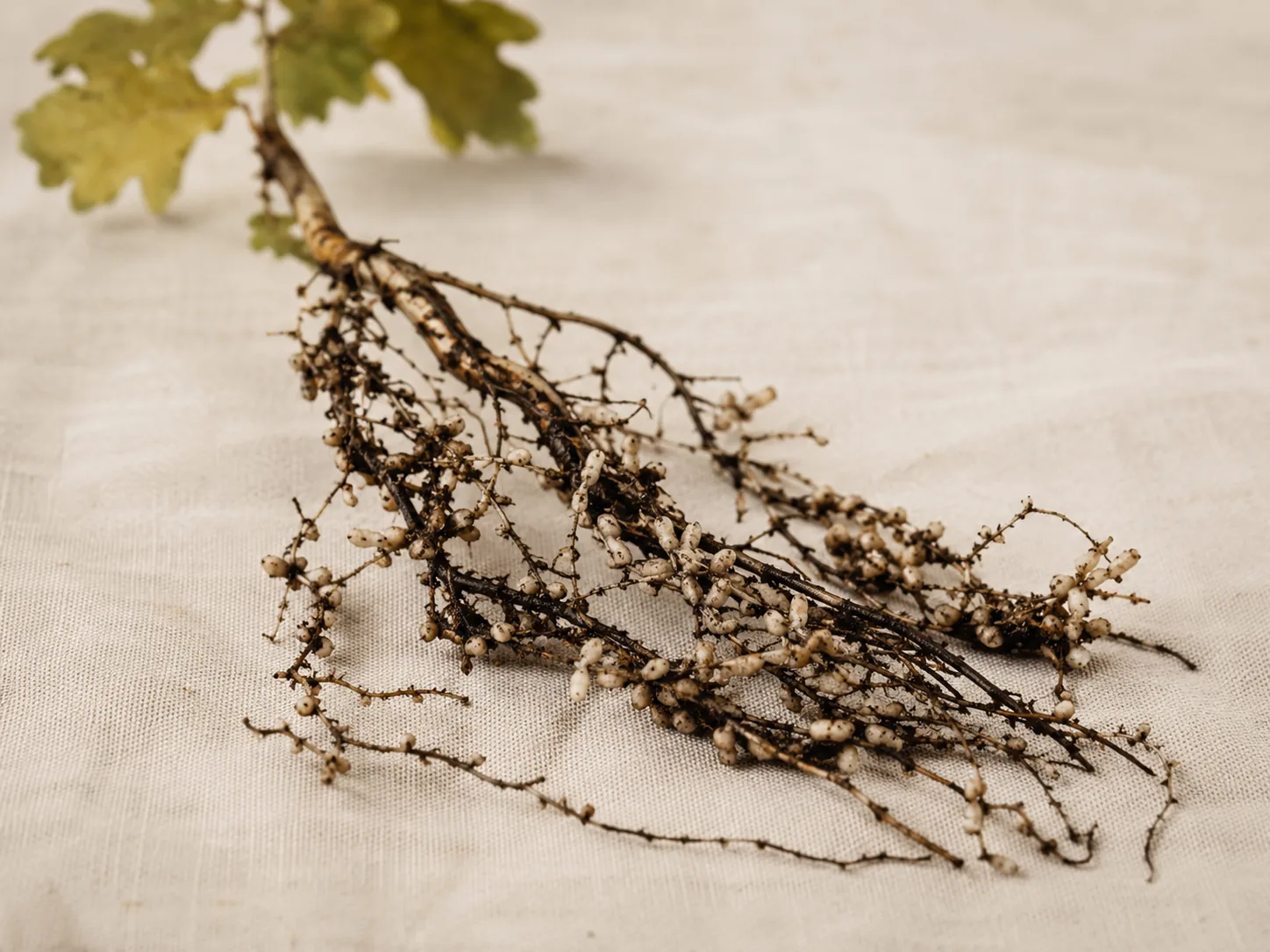
The fungus and the tree live in symbiosis: each feeds the other. The grower puts it simply: if the tree lacks food, it will not give any to the fungus.
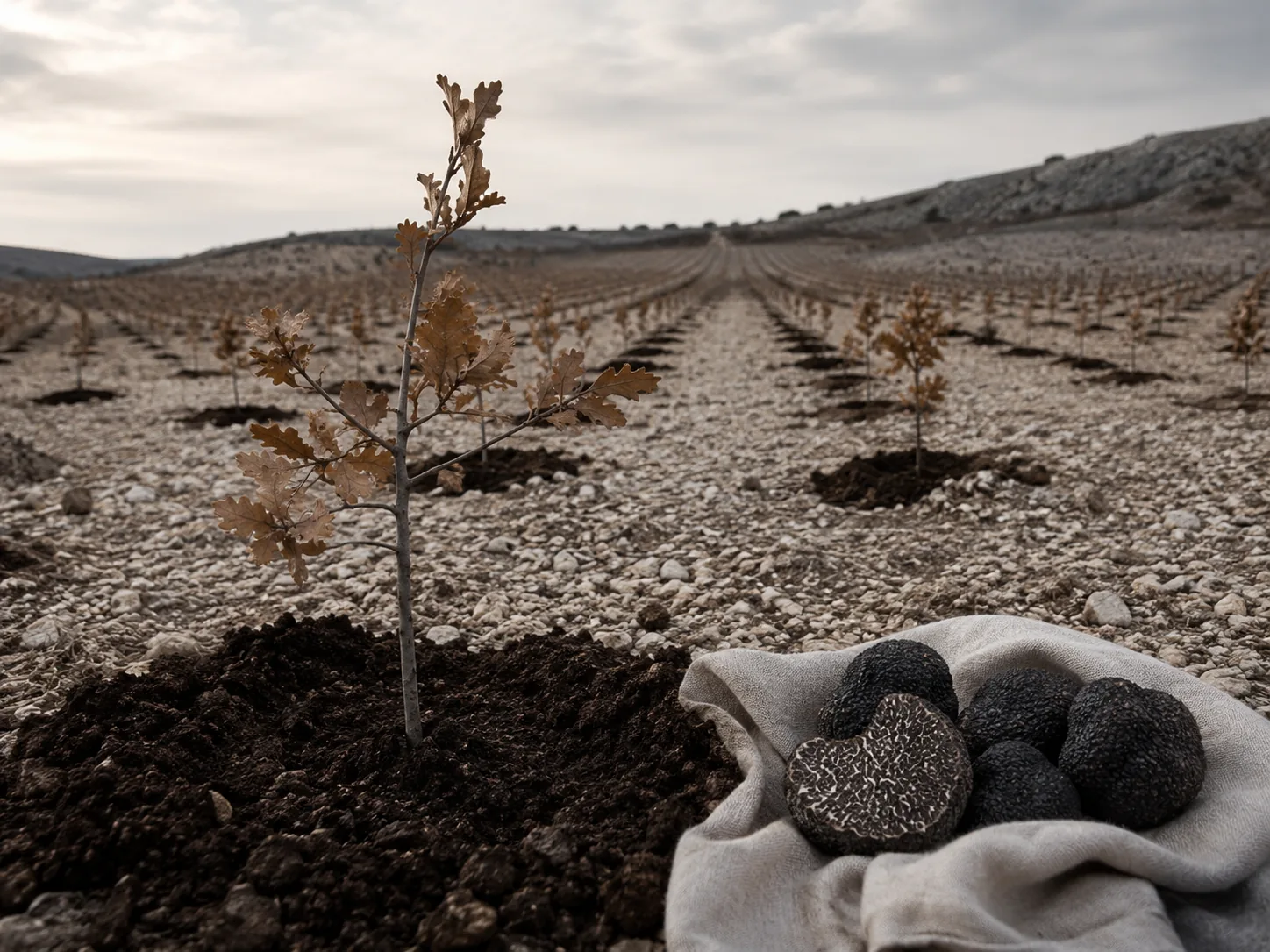
That is why a plantation starts with an inoculated tree, and why the health of the tree decides the harvest years later.
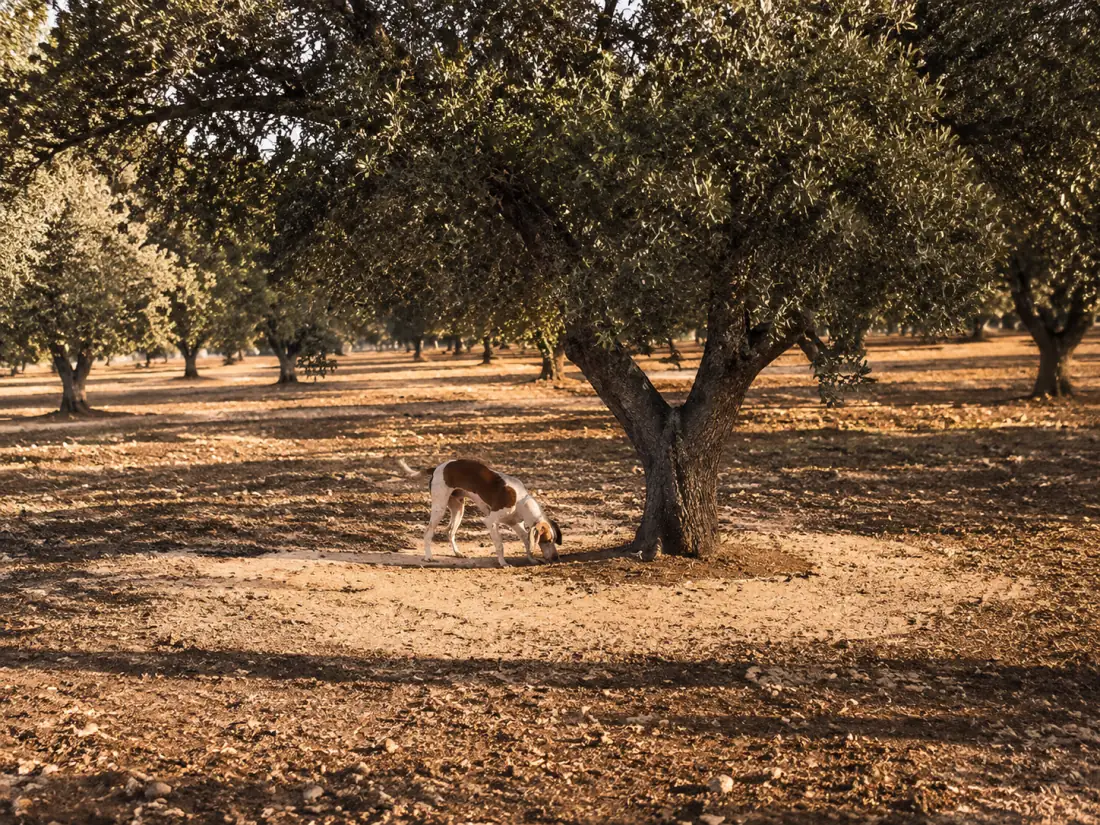
It is never seen from the surface. A dog trained on its scent marks the spot and the grower opens a small hole with a narrow knife. The dog must not scratch it and the hand must not break it: a split piece is worth a fraction of a whole one.
How Tuber melanosporum is graded in the trade
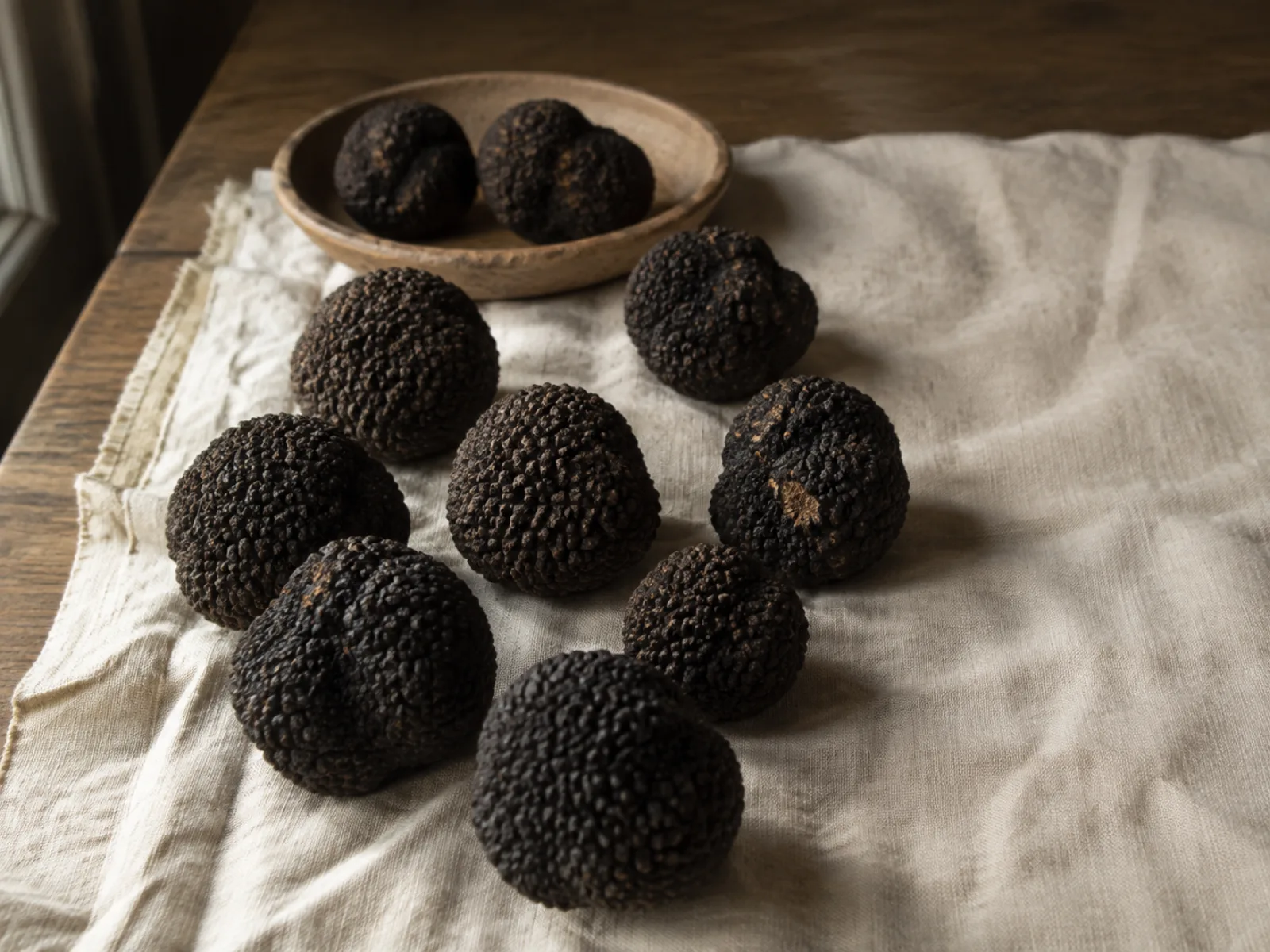
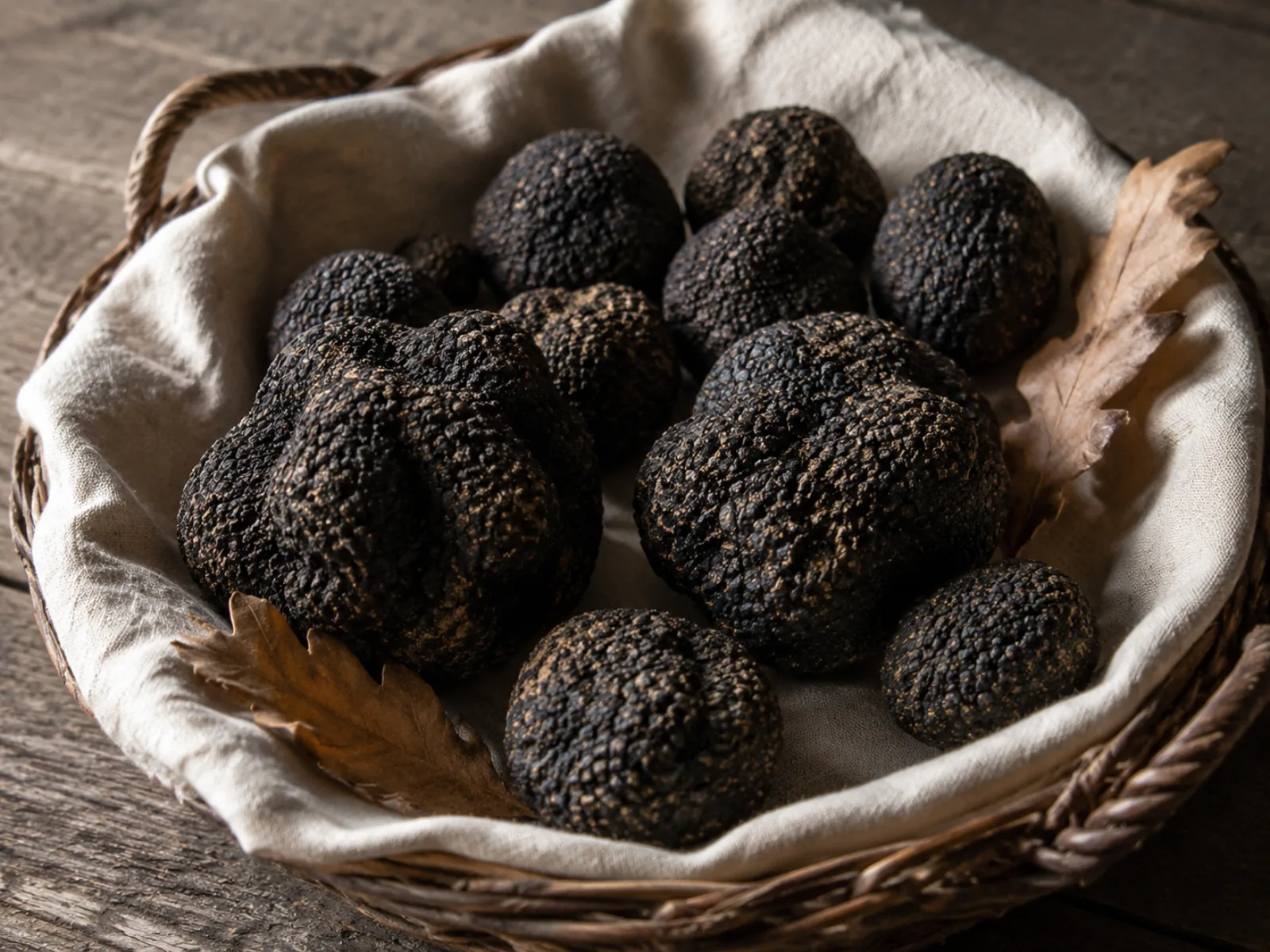
Grading is by shape, colour and skin, from Extra down to pieces. Extra is regular and globose, firm and free of surface damage; First carries small defects that do not affect its quality and Second more marked ones; pieces are sound truffle that broke while being lifted, sorted or moved.
A truffle that breaks on the way out of the ground loses its shape, not its aroma, and that is the truffle sold to be eaten. Off-grade — sorting offcuts and damaged or rotten truffle — sits in the same price band but is not kitchen product: in the trade it goes to nests and spore inputs in truffle orchards, and to nurseries, to mycorrhize plants and prepare spore substrates.
Tuber melanosporum and Tuber aestivum are two species
Tuber melanosporum is the winter species. Tuber aestivum, the summer truffle, is a different one: in season from spring to autumn, paler flesh, a milder and weaker aroma, and a flavour that runs towards nuts, walnut and hazelnut. It is used in the same dishes, in larger quantities.
In the southern hemisphere, Tuber melanosporum is harvested in counter-season. Growers report large yields in Australia and New Zealand; our grower notes that he has not seen those plantations himself.
Buy Tuber melanosporum
Grow Tuber melanosporum
Is Tuber melanosporum the same as Périgord truffle?
Yes. Périgord truffle is a trade name for the same species. Most of it is now grown in Spain, in Teruel.
When is Tuber melanosporum in season?
From December to April in Spain. Outside those months there is no fresh Spanish black truffle, only preserved and frozen formats.
Can Tuber melanosporum be cooked?
It tolerates gentle heat, unlike white truffle. A short warm-through in butter or a few minutes in a finished sauce holds the aroma; long boiling and hard frying destroy it.
Why is Spanish black truffle often sold as French?
Because around 90 per cent of the Spanish harvest is exported fresh to France, where it is processed and re-sold. The species is the same.
Buy it from the people who lift it
If you know what you want, the shop page explains the grades and how an order is confirmed. If you want to plant it, the truffle trees page explains where the plant comes from.