Winter Truffle (Tuber melanosporum)
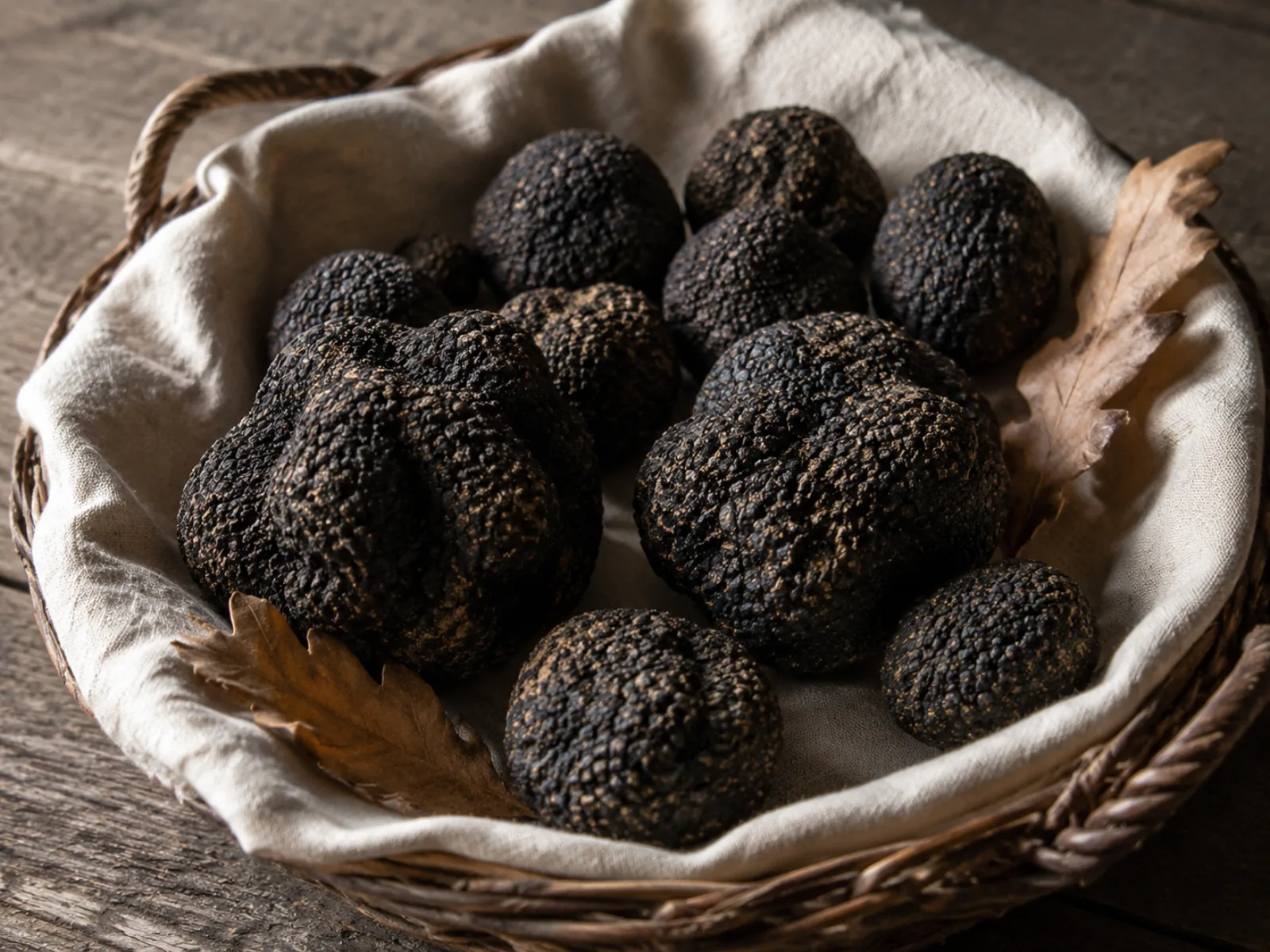
Winter truffle is the English trade name for Tuber melanosporum, the black truffle with the strongest aroma of the year.
Its season in Spain runs from December to April.
Outside those months there is no fresh winter truffle: what is offered is either another species or a preserved format.
Why the aroma only arrives in winter
Tuber melanosporum ripens in winter, in limestone soil, after cold nights, and the aroma develops only at the end of that ripening.
That is why only ripe pieces are lifted. The dog marks the ripe one and leaves the unripe one in the ground; a piece dug too early does not ripen afterwards.
How to recognise a ripe winter truffle
Three checks are enough, and two of them happen before you cut.
- Skin: black, with small, tightly packed pyramid-shaped warts.
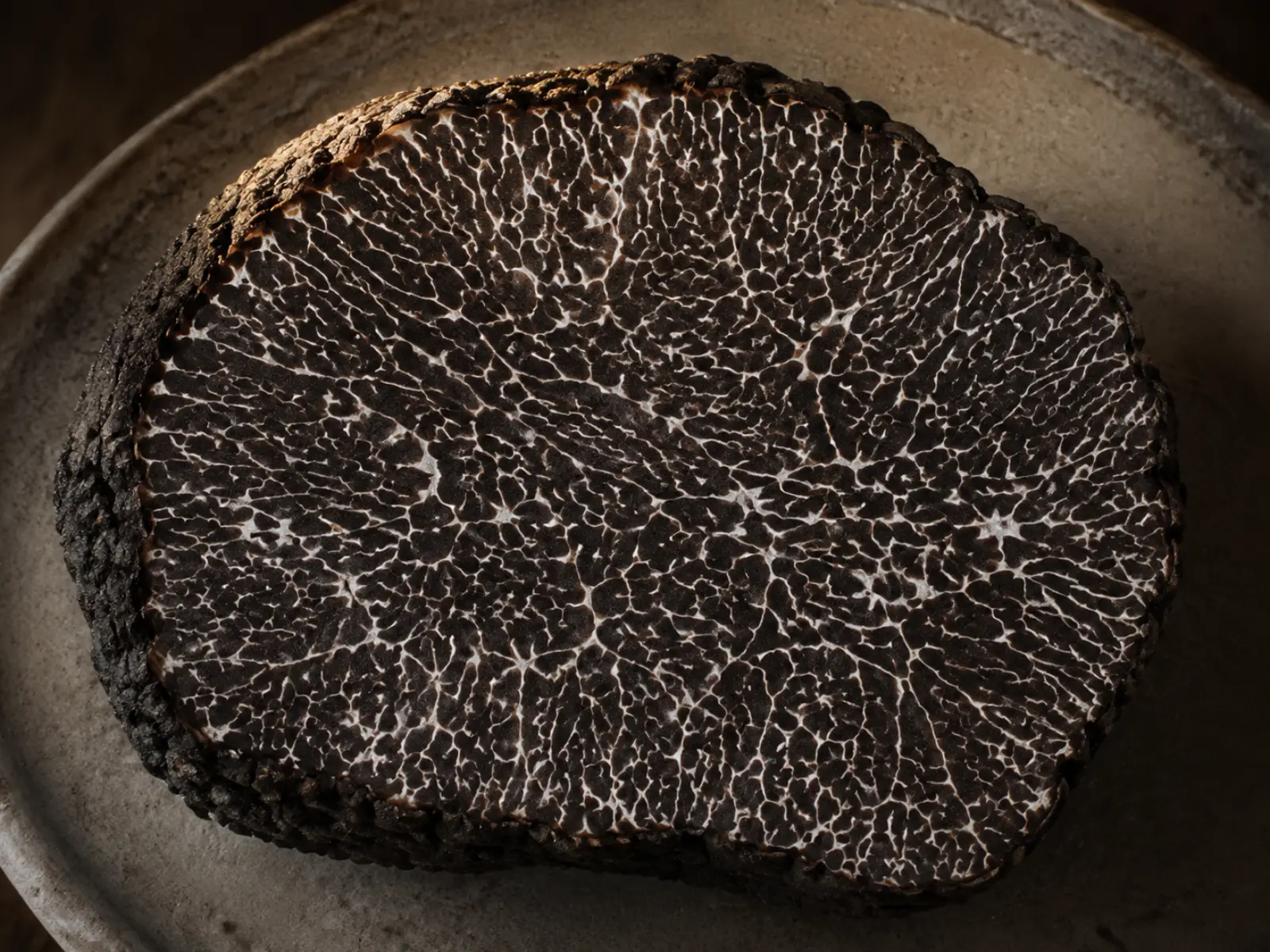
- Flesh when cut: dark purple-brown, marbled with fine, branching white veins.
- Smell: penetrating and earthy, with a note of damp woodland. A piece with no smell is unripe or past its prime.
Winter truffle against summer truffle
The summer truffle, Tuber aestivum, is a different species. Its season runs from spring to autumn, its flesh is paler, and its aroma is milder and weaker — pleasant, but not this.
Its flavour goes somewhere else too: towards nuts, walnut and hazelnut. It is used in the same dishes as the winter truffle, simply in larger quantities, because it takes more of it to lead a plate.
It is not an unripe winter truffle, and it should not be priced or labelled as one. If a supplier offers black truffle in July, that is the species being sold.
The grower works it only occasionally, and says why: it is mainly a way of keeping the dogs in practice out of season. The return does not come near that of the black winter truffle.
The season: December to April
The campaign starts in December and ends in April. In those four months the harvest happens, and only in those months is there fresh product.
Within the season the quantity varies week to week with the weather, which is why availability is confirmed per order rather than promised in advance.
For a fixed date, Christmas, New Year or a dinner, ask early. Those are the weeks of highest demand.
What the grades of winter truffle mean
Grading is by shape and by the state of the skin, not by aroma. A grower explains the price gap as labour: a round piece is cleaned in about two minutes, an irregular one full of soil in fifteen.
- Extra: round, whole, no cosmetic damage. For display and for even slices.
- First and Second: small defects of shape, colour or skin. For the kitchen, where none of that is seen.
- Pieces: sound truffle broken during lifting, sorting or transport. Shape lost, aroma kept, and sold ready to use at the lowest price.
- Off-grade: sorting offcuts and damaged or rotten truffle. Same price band as pieces, but not kitchen product.
Related pages:
- Tuber melanosporum: the Black Truffle
- Buy Black Truffle Direct from the Grower
- Fresh Black Truffle, in Season December to April
- Black Truffle Price per Kilo
When is winter truffle season?
From December to April. In those months Tuber melanosporum is harvested in Spain; after that there is no fresh winter truffle until the next season.
What is the difference between winter truffle and summer truffle?
They are two species. Summer truffle is Tuber aestivum, in season from spring to autumn, with a milder, weaker aroma and a flavour closer to nuts, walnut and hazelnut. It is used the same way, in larger quantities, but it does not replace the winter one.
Order winter truffle from the current harvest
Tell us the weight and the day you need it in the kitchen. We confirm which pieces have been harvested and their real weight before you pay.
Order now